You set your alarm with good intentions. But when it goes off, something feels wrong: the fog is thick, the motivation is nowhere, and even getting out of bed takes more effort than it should.
Most people blame their mornings. The real issue usually happened the night before.
Here are the most common habits that undermine your sleep quality and make everything harder before the day even starts, and what to do about it.
1. Drinking alcohol to wind down
It's one of the most common wind-down habits, and one of the most counterproductive.
A glass of wine might feel relaxing, but alcohol is one of the most disruptive things you can do to your sleep architecture. It suppresses REM sleep, the stage responsible for memory consolidation, emotional regulation, and cognitive recovery. You might fall asleep faster, but you'll cycle through sleep less effectively, spending more time in lighter stages that leave you feeling unrested.
The morning-after grogginess from even moderate alcohol isn't a hangover. It's your brain telling you it didn't get the restoration it needed.
2. Caffeine too late in the day
Caffeine has a half-life of around six hours. That means half of a 3pm coffee is still circulating at 9pm, raising alertness, suppressing adenosine (the compound that builds sleep pressure throughout the day), and making it harder for your brain to downshift when you actually want it to.
You might not feel wired. You might fall asleep without any trouble. But the quality of that sleep is lower than it would be without the late caffeine, and you'll feel it the next morning.
For most people, cutting caffeine off after midday makes a noticeable difference within a week.
3. Screens right before bed
Blue light from phones, laptops, and TVs suppresses melatonin production by signalling to your brain that it's still daytime. This isn't a small effect: research suggests it can delay melatonin onset by up to 90 minutes, effectively pushing your body clock back without you realising it.
Your body produces melatonin through a conversion pathway that starts with L-Tryptophan, an amino acid that converts to serotonin and then to melatonin. That process is triggered by darkness and takes time. When you expose yourself to bright screens right up until sleep, you're interrupting it at the source.
Even dimming your screen and enabling night mode helps. But a genuine wind-down window - even 30 minutes - makes a bigger difference than most people expect.
4. Going to bed at inconsistent times
Your circadian rhythm is essentially a biological clock. It regulates cortisol, melatonin, body temperature, and dozens of other processes based on when it predicts you'll be asleep and awake.
When your sleep schedule varies (later on weekends, earlier on weekdays) that rhythm never fully syncs. You're constantly asking your body to perform a process it hasn't had time to prepare for.
Consistent sleep and wake times, even on days off, are one of the most evidence-backed interventions for improving sleep quality. The actual timing matters less than the consistency.
5. No wind-down routine
Cortisol, your primary stress hormone, is supposed to drop in the evening to allow melatonin to take over. But if you're working late, scrolling through news, or mentally replaying the day right up until you close your eyes, cortisol stays elevated.
A brain that hasn't had time to decelerate doesn't enter deep, restorative sleep easily. The transition from waking to sleeping isn't a switch: it's a gradient, and your nervous system needs conditions that support it.
This is where adaptogens play a meaningful role. Reishi Mushroom has been studied for its ability to reduce stress and support relaxation without sedation. Passionflower increases GABA - the brain's primary calming neurotransmitter - helping quieten the mental noise that keeps people staring at the ceiling. L-Theanine promotes alpha brain wave activity: the relaxed-but-alert state that's ideal for drifting off.
6. Eating a heavy meal close to bedtime
Digestion is an active process. When your body is working through a large meal, your core temperature stays elevated and your metabolic activity remains high, both of which interfere with sleep onset and quality, particularly in the first half of the night when deep sleep is most concentrated.
This doesn't mean you should go to bed hungry. A small, light meal or snack in the evening is fine for most people. It's the timing of large, heavy meals that matters. Give yourself at least two to three hours between your last big meal and your intended sleep time.
7. Ignoring magnesium
Magnesium deficiency is far more common than most people realise and it directly affects sleep quality.
Magnesium plays a central role in muscle relaxation, nervous system regulation, and GABA production. It also helps regulate melatonin pathways and supports the body's ability to manage cortisol. Low magnesium often shows up as restless sleep, night waking, or that specific tired-but-wired feeling where you're exhausted but can't switch off.
Not all magnesium is equally effective. Magnesium Bisglycinate is one of the most bioavailable forms, meaning it's actually absorbed and utilised rather than largely passing through the digestive system. It's also gentler on the stomach than cheaper forms like magnesium oxide.
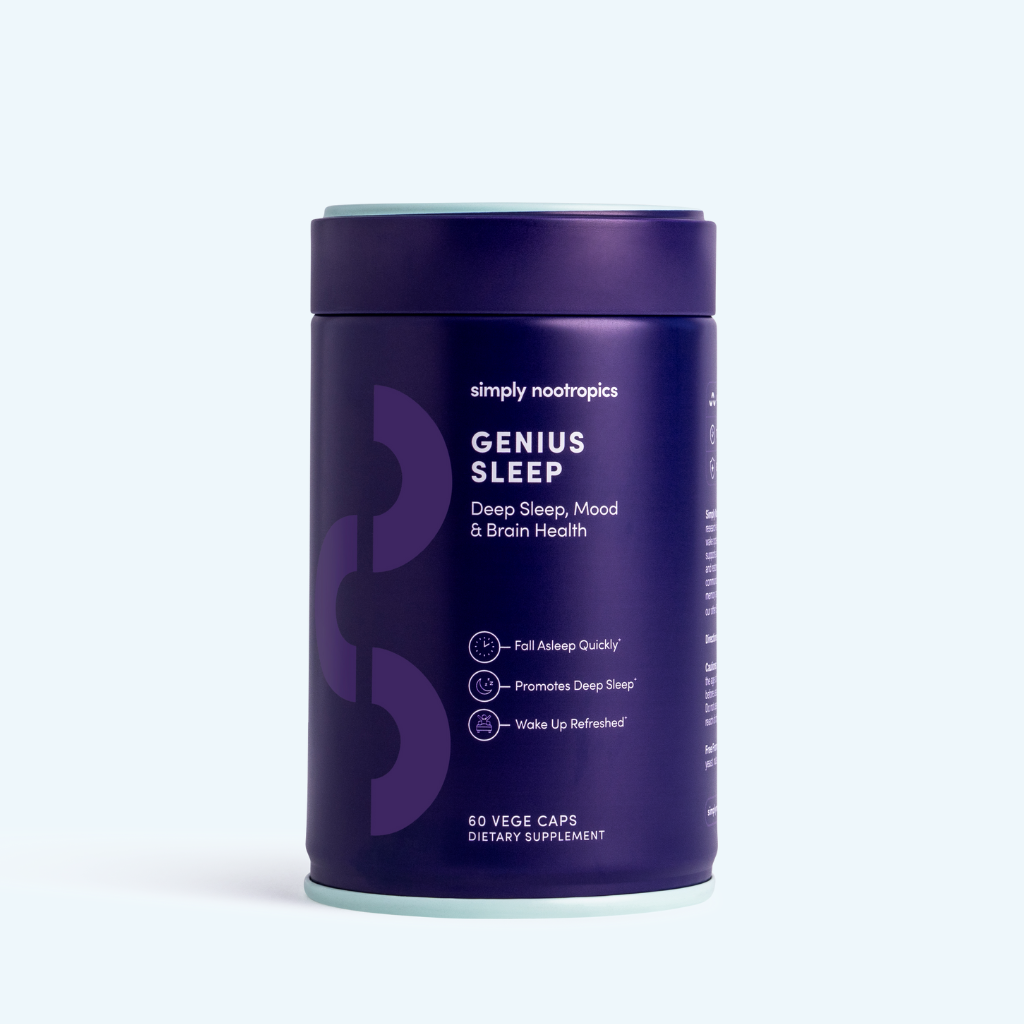
Genius Sleep
Genius Sleep was formulated around this principle: addressing multiple aspects of the sleep process in a single nightly formula. It combines L-Theanine, Reishi Mushroom, Magnesium Bisglycinate, L-Tryptophan, Tart Cherry, Passionflower, and Zinc, each chosen to support a different part of the sleep process, from nervous system relaxation and GABA regulation to melatonin support and overnight cognitive recovery. No sedatives, no grogginess. Just the nutritional conditions your brain needs to do what it's already designed to do.
Better mornings start the night before.