






If you have spent the last year feeling mentally foggy, slow to think, and chronically exhausted despite doing everything right, you might not be burned out. You might be perimenopausal.
The two can look similar from the outside, and they feel nearly the same from the inside, which is exactly why so many women in their 40s spend years being told to rest more, stress less, and take a break before anyone thinks to check what is happening hormonally.
The cognitive changes that come with perimenopause are real, measurable, and largely driven by what is happening to your sleep. This is why so many women who prioritise sleep quality during perimenopause, with tools like Genius Sleep, report that the mental clarity they had been missing starts to return. Not because of a direct hormonal fix, but because their brain is finally getting the conditions it needs to restore itself overnight.
Here is what is actually going on, why the two get confused so reliably, and why getting this distinction right matters more than most people realise.
Perimenopause Starts With Your Sleep, Not Your Hormones
Most women expect perimenopause to announce itself with hot flushes and irregular cycles. For many, the first sign is subtler and far more disruptive: sleep starts falling apart. Oestrogen and progesterone play active roles in sleep regulation, and as their levels begin to fluctuate in the years before menopause, the quality of sleep changes well before the more recognisable symptoms arrive.
Progesterone in particular has a calming, sleep-promoting effect. As it drops, women often find themselves waking in the early hours and struggling to fall back to sleep, experiencing lighter sleep overall, or feeling unrested despite clocking a full night in bed.
Night sweats compound the problem, but even women who do not experience significant temperature changes report that their sleep feels different and less restorative than it used to.
What Poor Sleep Does to Your Brain
This is where the burnout confusion begins. Sleep is not a passive state. It is when your brain consolidates memory, clears metabolic waste, and processes the cognitive load of the day. When sleep quality deteriorates consistently over months or years, the effects on thinking are significant and cumulative.
The specific symptoms that follow are slower recall, difficulty holding onto a thought, reduced ability to focus for extended periods, and a general sense that your brain is running at partial capacity. These are not vague or imagined complaints. They are direct consequences of disrupted sleep architecture, particularly the loss of deep, slow-wave sleep stages that perimenopause tends to affect most.
The cruel irony is that these symptoms are indistinguishable from what burnout looks like. Both involve fatigue that sleep does not seem to fix, cognitive sluggishness, reduced tolerance for stress, and a sense that you are operating below your usual capacity. The difference is causation. Burnout is driven by prolonged psychological stress. What many perimenopausal women are experiencing is a physiological disruption that no amount of annual leave will resolve.
Why the Misdiagnosis Keeps Happening
The average woman reaches perimenopause in her early to mid 40s, which also happens to be a period of life that is objectively demanding. Careers are often at their most pressured, family responsibilities are high, and the cultural script around this stage of life is that feeling depleted is simply what happens when you are doing a lot.
This context makes burnout an easy and socially accepted explanation. It also means perimenopause gets missed for longer than it should. Women adjust their workloads, scale back their commitments, wait for the rest to kick in, and find that nothing changes. The cognitive fog persists not because they are not resting enough but because the underlying sleep disruption is ongoing and unaddressed.
Healthcare providers are beginning to catch up with how frequently perimenopausal cognitive changes present as apparent burnout. The conversation is shifting, driven partly by a surge of women sharing their experiences publicly and demanding more specific answers. But the gap between what is happening and what gets diagnosed remains significant for a lot of women.
The Symptoms That Set It Apart
There are some signs that point more strongly toward perimenopause than burnout. Sleep that feels consistently unrestorative, regardless of hours, is one. Waking between two and four in the morning and finding it difficult to return to sleep is another pattern that tends to track with hormonal fluctuations rather than stress alone.
Changes in memory that feel physical rather than psychological are also worth paying attention to: reaching for a word that will not come, losing a thought mid-sentence, or finding it harder to retain new information. These are distinct from the emotional exhaustion and detachment that characterise burnout, even when they occur alongside it.
Cycle changes, even subtle ones, are also a useful signal. Most people think perimenopause begins when periods stop, but that is not how it works. Perimenopause does not begin when periods stop. It can start years earlier, and cognitive symptoms can precede obvious hormonal changes by a significant margin.
What Actually Helps
Addressing perimenopause-related brain fog through sleep is one of the most practical approaches available. The goal is not just more sleep but better quality sleep, specifically restoring the deeper, more restorative stages that perimenopause tends to disrupt first.
Consistent sleep timing, limiting stimulants in the evening, and keeping the sleep environment cool are foundational. Magnesium has a well-established role in supporting sleep onset and sleep quality. It supports the nervous system in winding down at the end of the day and helps maintain uninterrupted sleep through the night.
Many women find targeted sleep support particularly useful during the perimenopause years, when sleep becomes less predictable and the cognitive cost of a bad night starts to compound.
Genius Sleep
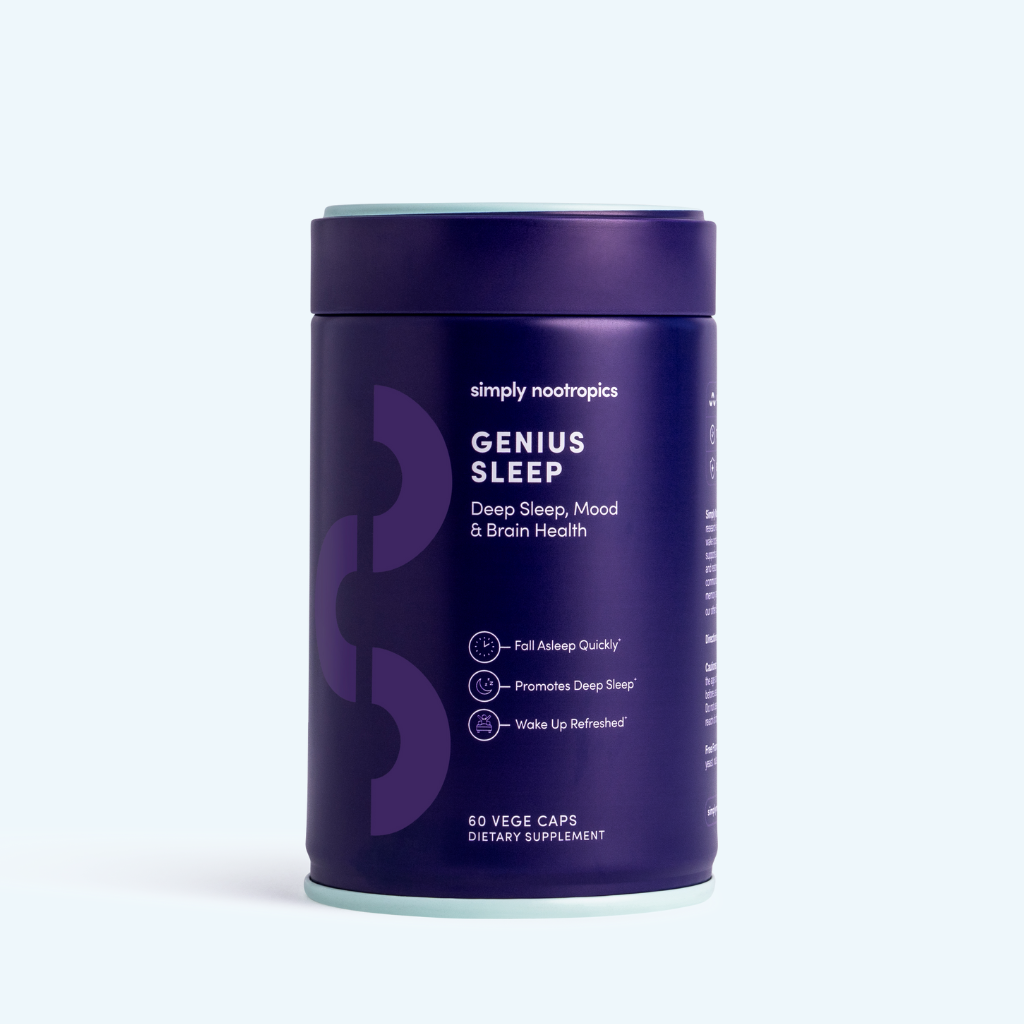
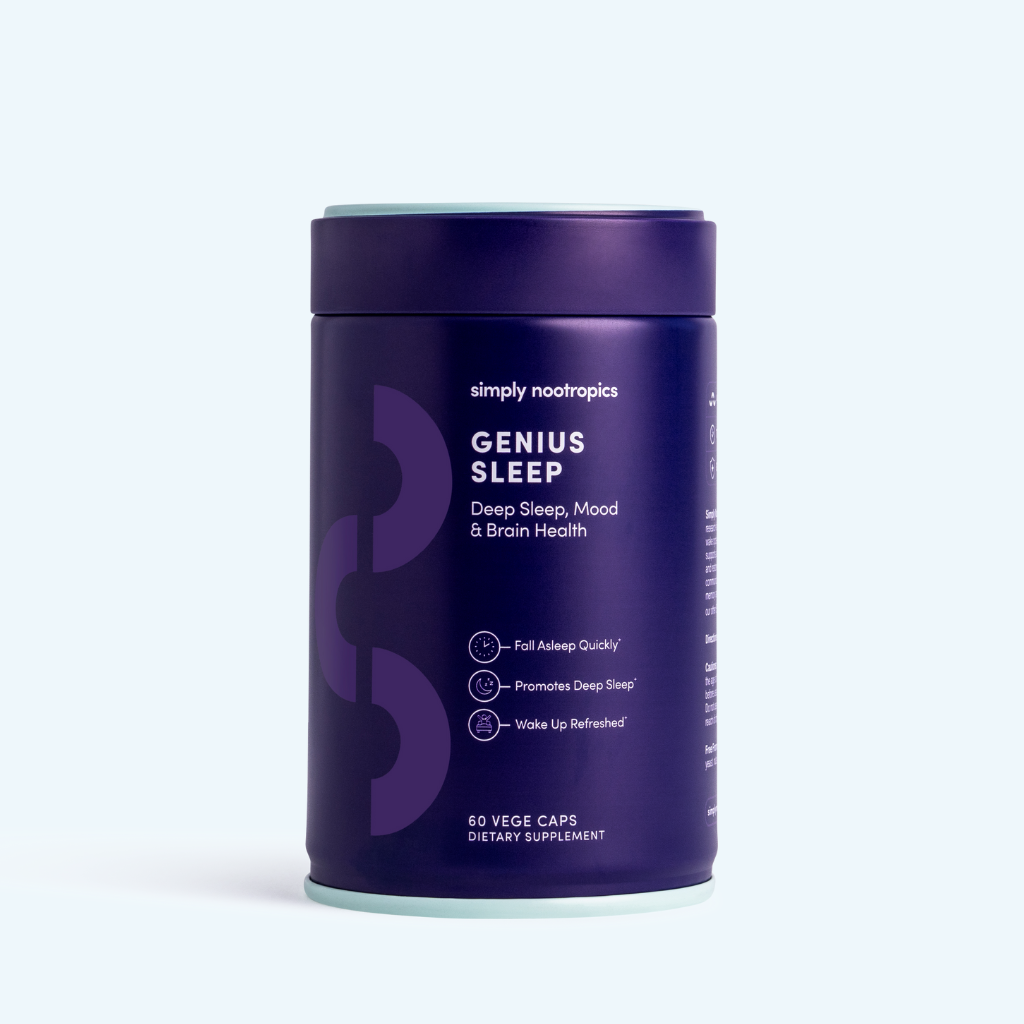
Genius Sleep is a sleep support supplement formulated with magnesium bisglycinate, reishi mushroom extract, and L-theanine to support sleep quality, relaxation, and overnight recovery.
For women navigating the sleep disruption that often accompanies perimenopause, Genius Sleep provides targeted support for the deeper, more restorative sleep stages that matter most for how you think and feel the following day. If the brain fog you have been putting down to burnout is not shifting, better sleep is often the first place worth looking.