

Most of us think about sugar in terms of energy, teeth and waistlines. Fewer people connect it with fine lines. But researchers have studied the link between sugar and skin for decades, and the process behind it has a name: glycation.
The short answer is yes, sugar can play a part in how your skin ages. It works slowly, it acts on the proteins that keep skin firm, and it sits alongside other big factors like sun exposure and genetics. This guide covers what the science says and what you can do about it.
What Is Glycation?
Glycation is a chemical reaction between sugar and protein. When sugars such as glucose and fructose circulate in the body, some of them attach to proteins without any enzyme controlling the process. Over time, these bonds turn into stable compounds called advanced glycation end products, or AGEs.
Your body makes AGEs every day as a normal part of metabolism. The amount depends on how much sugar is available, how long proteins stay in the body, and outside factors like UV light. A review in Clinics in Dermatology describes how glucose and fructose bind to the amino acids in collagen and elastin, the two proteins that support the dermis.
Why Skin Collagen Is So Vulnerable
Collagen gives skin its structure. Elastin lets it stretch and spring back. Both proteins sit in the dermis, the layer below the surface, and both last a long time once your body makes them.
This long lifespan explains why skin collects so much glycation. Researchers estimated the half-life of skin collagen at around 15 years, compared with 117 years for cartilage collagen. The same study found that the longer a collagen fibre stays in the body, the more AGEs it collects. Skin collagen has years to gather sugar damage before the body replaces it.
What AGEs Do to Your Skin
When AGEs form on collagen, they create cross-links between neighbouring fibres. Healthy collagen fibres slide past each other and keep skin supple. Cross-linked fibres become stiff and brittle, and the body struggles to repair them.
The Clinics in Dermatology review explains that these cross-links make collagen fibres hard to repair. In practical terms, this can mean:
-
Skin loses some of its ability to stretch and recover.
-
Fine lines become more visible as the support layer stiffens.
-
Skin recovers more slowly from everyday stress.
-
UV exposure speeds up the process, since sunlight and glycation act together.
What the Research Shows
Most of the evidence on sugar and skin comes from lab studies and observational research. Scientists can measure AGEs in skin with a light-based test called skin autofluorescence, because AGEs glow under certain wavelengths.
One study of healthy volunteers found that skin autofluorescence increased with age and body mass index in people under 40. Above 40, age became the main factor. A second group in the same study showed that skin elasticity followed a similar pattern, which led the authors to suggest that AGE build-up contributes to reduced elasticity.
It helps to be clear about the limits here. These findings show a link, not proof that a slice of cake gives you wrinkles. No trial has shown that cutting sugar reverses existing lines. What the research does support is a sensible idea: lower glycation over many years gives your collagen a better environment.
Sugar Is Not the Only Source of AGEs
Your body makes AGEs, but you also eat them. Food cooked at high, dry heat forms AGEs in the pan, on the grill and in the oven. That browned, crispy crust on roasted meat is partly glycation.
A study on AGEs in foods found that dry-heat cooking raised AGE levels in food by more than 10 to 100 times compared with the uncooked state. High-fat, high-protein animal foods tended to contain the most. Vegetables, fruits, whole grains and milk contained relatively few AGEs, even after cooking.
The same researchers found that moist-heat cooking, shorter cooking times, lower temperatures and acidic ingredients all helped reduce new AGE formation.
How to Lower Glycation’s Impact on Your Skin
You do not need to give up sugar entirely to look after your collagen. Small changes to how you eat and cook can lower your total AGE load. Start with these habits:
-
Cut back on sugary drinks, since they deliver a large dose of sugar in a short time.
-
Pair carbohydrates with protein, fibre and healthy fats to avoid energy spikes and crashes.
-
Choose whole fruit over juice, because the fibre slows how fast the sugar reaches your system.
-
Cook with moist heat more often by steaming, poaching, simmering or slow cooking.
-
Marinate meat in lemon juice or vinegar before cooking to reduce AGE formation.
-
Keep cooking temperatures moderate and avoid charring or heavy browning.
-
Wear a broad-spectrum sunscreen every day, since UV light makes glycation damage worse.
Supporting Collagen From the Inside
Reducing glycation protects the collagen you already have. You can also give your body what it needs to keep producing it. Your skin makes less collagen as you get older, so the collagen you build and keep becomes more valuable each year.
Protein intake matters here, along with vitamin C, which your body needs to form collagen. Hydrolysed collagen has also been studied for its effects on skin. A 2023 meta-analysis of 26 randomised controlled trials with 1,721 participants found that hydrolysed collagen improved skin hydration and elasticity compared with placebo. The benefits for hydration were stronger with use beyond eight weeks, so consistency counts.
Sugar does not age your skin overnight, and an occasional dessert will not undo your skincare routine. The concern is the long-term pattern, because skin collagen lasts for years and every year of high sugar intake gives AGEs more time to stiffen it.
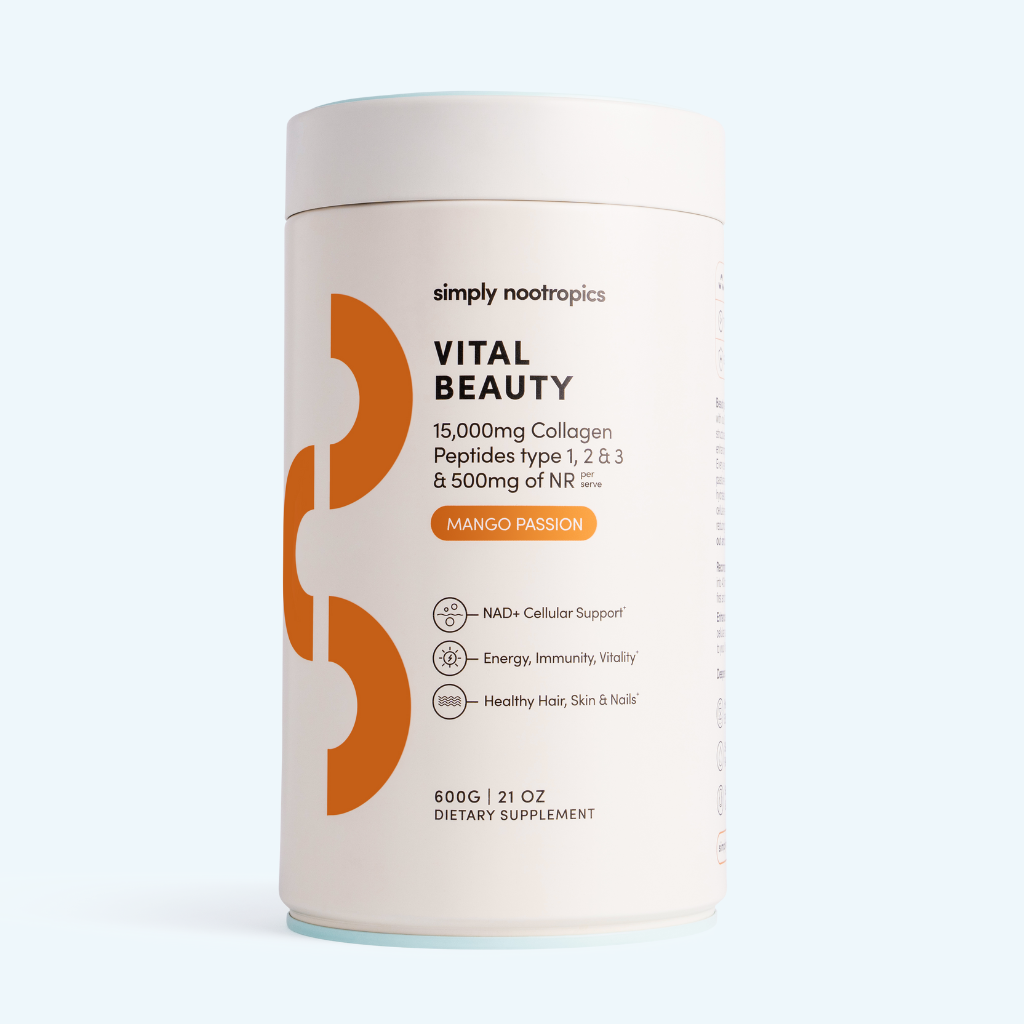
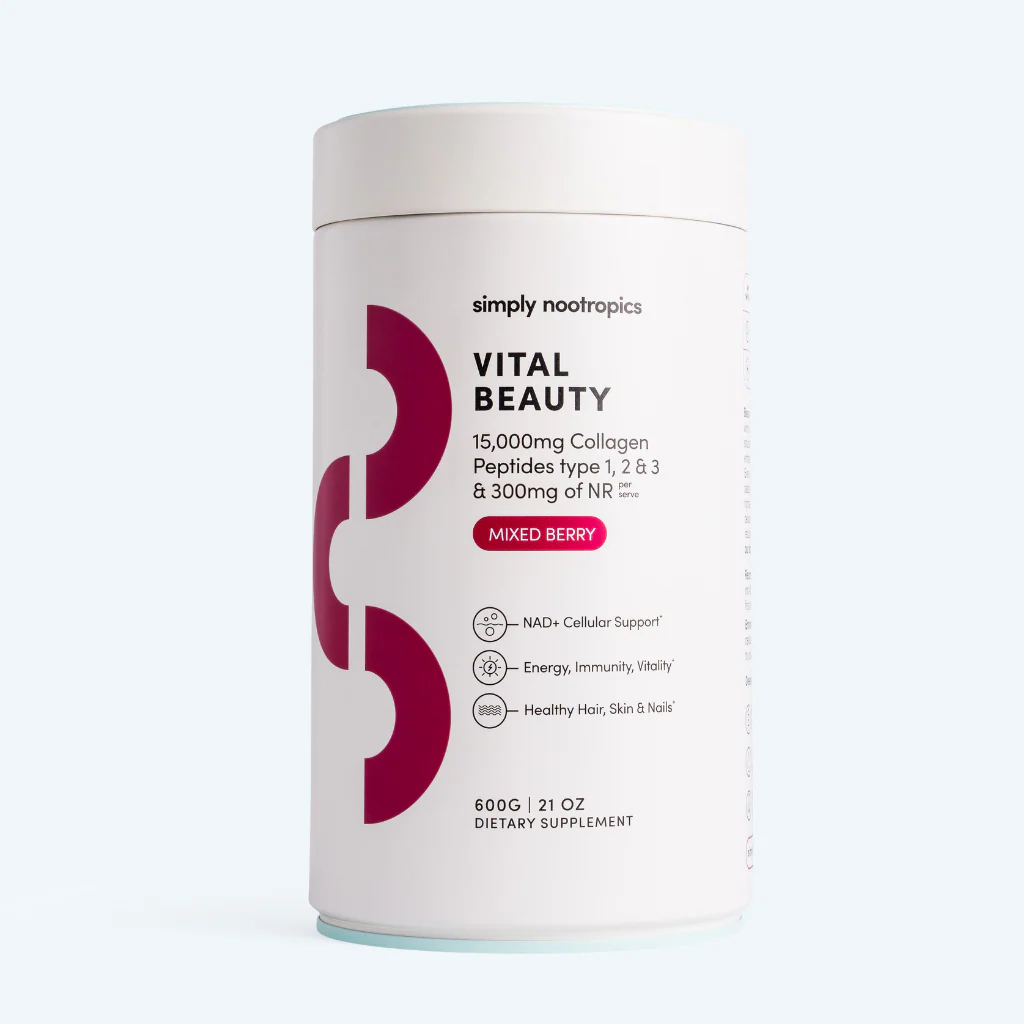
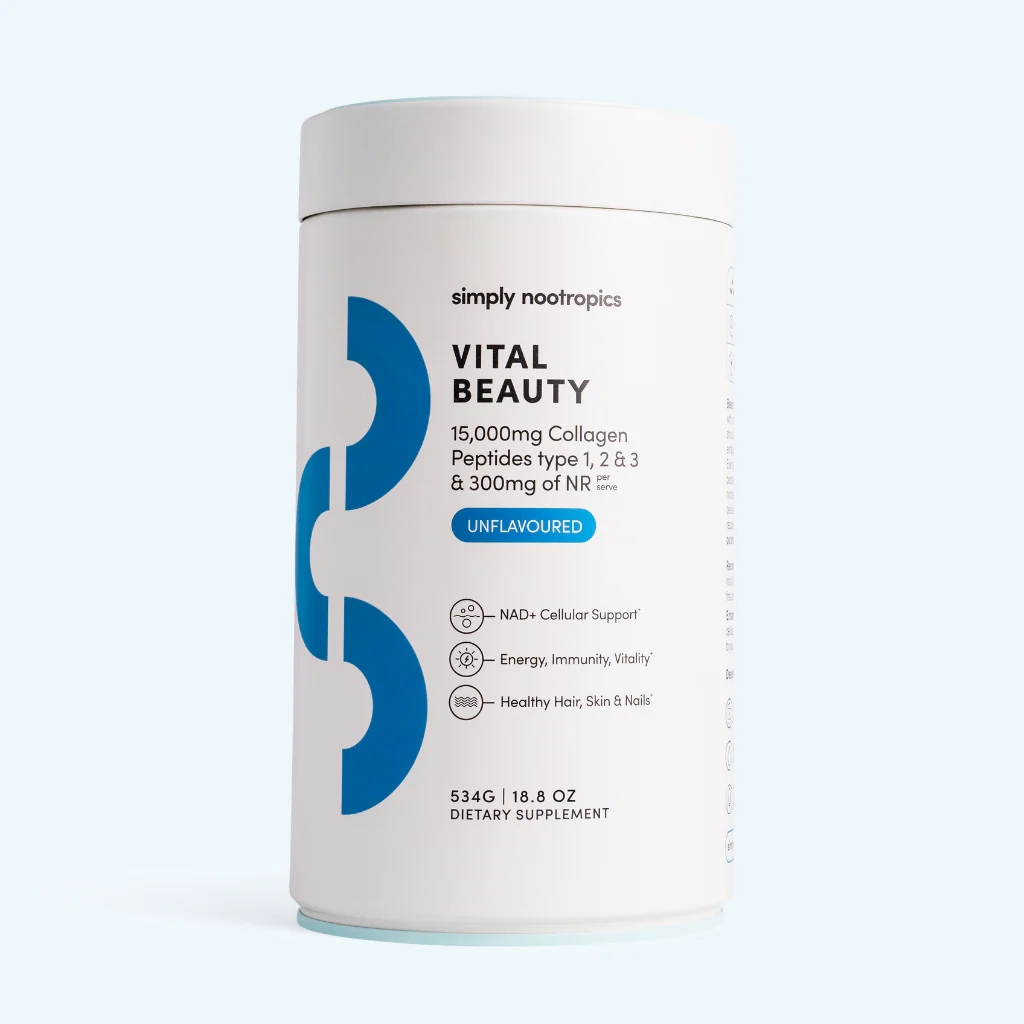
If you want to support your skin’s collagen every day, Vital Beauty Collagen makes it easy. Each serve gives you clinically dosed hydrolysed collagen peptides (types I, II and III), the same form studied in the research above, to support skin hydration, elasticity, hair, nails and joints.
Vital Beauty mixes into water or a smoothie, so it fits into the routine you already have. Pair it with lower-sugar habits and daily sunscreen to protect the collagen you have while you support the collagen you make next.