This week’s Longevity News pulls together four recent research stories that all point to the same theme: small, repeated signals (light, stress, medication effects, microbes, habits) can shape long-term outcomes far more than we expect. None of these studies are “one weird trick” material. But each offers a useful lens on how modern life interacts with the body, and where simple adjustments may have outsized value.
-
Artificial light at night may link brain stress to artery inflammation and heart risk
Night-time light pollution is one of those modern exposures that feels too normal to question. Street lamps, porch lights, hallway LEDs, neighbours’ floodlights, bright billboards, and of course screens - we’ve built a world that rarely gets truly dark.
A preliminary study presented at the American Heart Association’s Scientific Sessions 2025 suggests that higher exposure to artificial light at night is associated with a chain of biological signals that may matter for cardiovascular health: increased stress-related activity in the brain, greater inflammation in arteries, and higher risk of major heart-related events over time.
What made this investigation notable is how it tried to connect the dots. Researchers combined PET/CT imaging (which can assess metabolic activity in tissues) with satellite-based estimates of night-time light levels around participants’ homes. In other words, they weren’t only asking, “Do people exposed to more night light have worse outcomes?”.
The results suggested a fairly steady relationship: as night-time light exposure rose, markers of brain stress and arterial inflammation rose too, alongside cardiovascular event risk. The association was reportedly stronger for people living with additional environmental and social stressors (such as heavy traffic noise or lower neighbourhood income), which fits a broader pattern in public health research: exposures often stack rather than act alone.
Practical takeaway: you don’t need a perfect sleep cave, but you do want fewer unnecessary light signals after dark. If you can, dim your home lighting in the evening, avoid bright screens close to bedtime, and aim for a genuinely dark bedroom (even small sources like LEDs can add up). Community-level changes, like shielded streetlights, better targeting, motion-sensitive systems, may matter too, but your bedroom environment is the part you can control tonight.
-
A new mechanism may explain statin-related muscle symptoms for some people
Statins are among the most widely used medications for cardiovascular management, and they’re also notorious for one issue: muscle pain, weakness, or persistent fatigue in a subset of users. Those symptoms are one of the most common reasons people stop taking statins, which creates a frustrating trade-off: the medication can be genuinely helpful for cardiovascular risk management, but side effects can make it hard to continue.
New research from scientists at Columbia University points to a clearer “how” for at least some cases. Using cryo-electron microscopy (a technique that can reveal extremely detailed structures), researchers observed that a statin (simvastatin, in this case) may bind to a muscle protein called the ryanodine receptor, a channel involved in calcium regulation inside muscle cells. The team proposes that this binding could open the channel in a way that allows calcium to leak abnormally, disrupting muscle function and potentially triggering symptoms.
Practical takeaway: if someone experiences muscle symptoms on a statin, it’s not automatically “in their head” - there may be a measurable biological basis in at least some cases. At the same time, no one should change prescription medication without medical guidance. The value here is scientific clarity: understanding mechanisms is how medicine gets safer and more personalised over time.
-
Traveller’s diarrhoea is becoming harder to treat as antibiotic resistance rises
If international travel is on your 2026 list (or you’re already planning trips), this study is the least glamorous and most useful reminder: antibiotic resistance is changing what works for common travel-related infections.
A report described rising resistance patterns in bacteria that commonly cause traveller’s diarrhoea. The crucial nuance is geography. Resistance rates weren’t uniform. Some regions showed high resistance to one class, while other regions showed higher resistance to another. That means the “bring antibiotics and take them immediately” approach becomes even less sensible. Not only can it contribute to resistance over time, it may not be effective for the specific bacteria acquired in that location.
What’s more, many episodes of traveller’s diarrhoea resolve on their own, and symptom management can be enough in milder cases, especially when hydration is prioritised. The study’s framing supports a more measured approach: if symptoms are significant, get medical advice and, where possible, test before treating so the choice is targeted.
-
Realistic New Year’s health resolutions for people over 50
Not every useful piece of “longevity news” is a lab breakthrough. Some of it is behavioural science and public health: the actions that reduce risk, preserve independence, and make daily life safer.
A recent University of Michigan poll highlighted practical resolutions that many adults over 50 aren’t doing yet, but could adopt without needing a total lifestyle overhaul. The list includes a mix of planning, safety, social connection, and preparedness, such as:
-
Making the home safer for ageing in place (lighting, railings, trip hazards, bathroom safety)
-
Maintaining regular connection with friends (in person or virtually)
-
Getting better at spotting AI-driven scams and misinformation
-
Preparing for extreme weather and power outages (including medication continuity planning)
-
Thinking ahead about safer driving and future transportation needs
-
Discovering local resources like area agencies on ageing
-
Making the most of doctor’s appointments with a “care companion” when helpful
-
Reviewing whether daily aspirin use is appropriate based on current guidance
The value of a list like this is that it reframes health as more than diet and exercise. It’s also about systems: the structures that make good choices easier and risky situations less likely.
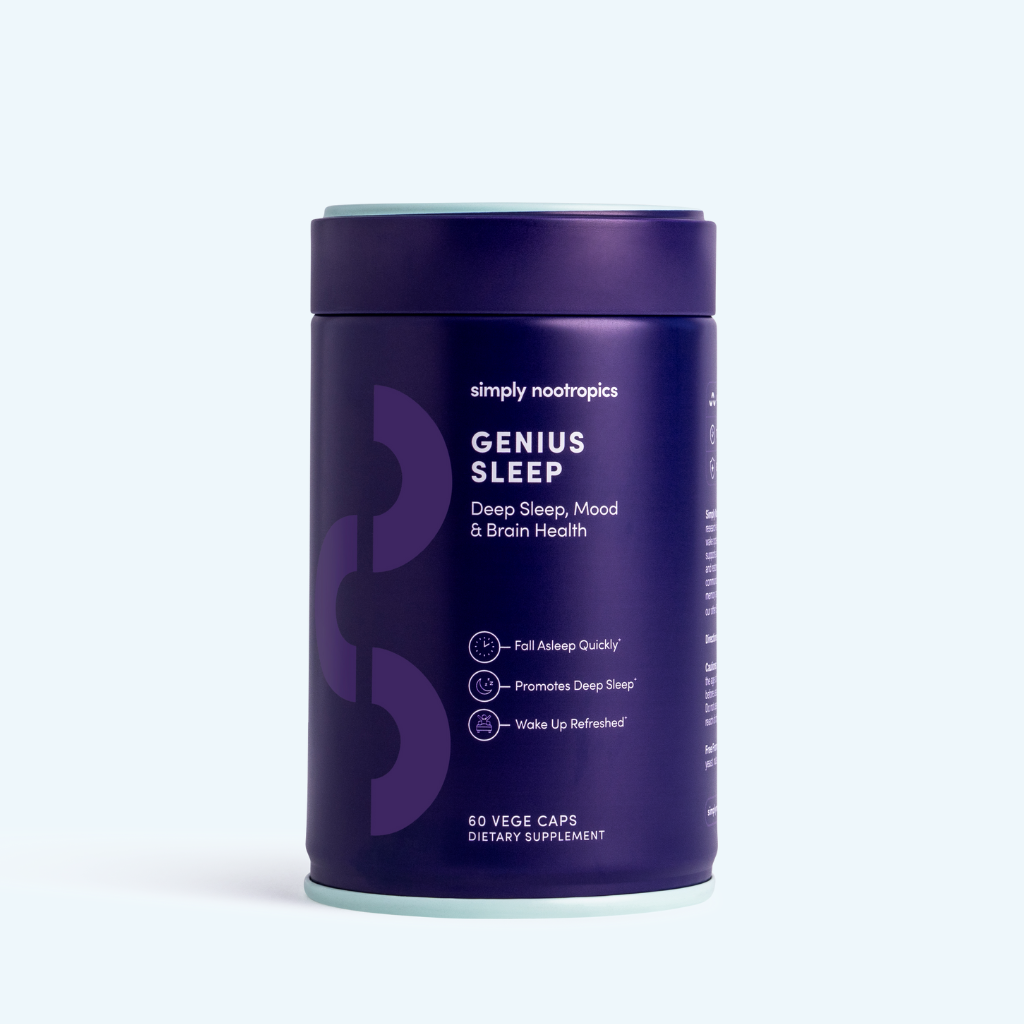
Genius Sleep
Across all four stories, one thread keeps surfacing: stress signals accumulate, and recovery matters. Night-time light can nudge the brain towards alertness when it should be winding down. Travel throws routines off and can create physical strain. Medication side effects often intersect with fatigue and physical resilience. And many realistic health goals, from social connection to driving safety, get harder when sleep is consistently poor.
That’s why sleep support remains one of the most practical levers in a longevity routine: not as a “hack”, but as the foundation that makes everything else easier to sustain.
Simply Nootropics Genius Sleep is formulated with ingredients commonly used to support an evening wind-down routine, including reishi mushroom extract, L-theanine, L-tryptophan, magnesium bisglycinate, tart cherry extract, passionflower extract, and zinc gluconate. The intent isn’t to knock you out, it’s to support the conditions that help sleep do its job: settling the nervous system, easing the transition into rest, and supporting overnight recovery.
If you’re optimising anything this month, start with your evenings. A darker bedroom, fewer late-night light cues, and a consistent wind-down ritual with Genius Sleep often deliver more than people expect, because they reduce background stress, night after night.