

Most conversations about menopause focus on hot flushes, sleep and mood. Muscle rarely comes up, even though it changes during these years too. Falling oestrogen affects more than your cycle.
It also changes how well your body holds on to muscle, and that has consequences for your strength, balance and metabolism, and for how capable you feel in your own body over the decades ahead.
Muscle loss is not something you simply have to accept. Research points to two things that make the biggest difference: how you move and what you eat. Here is what happens to muscle around menopause, why it matters, and the habits that help you keep it.
What Happens to Muscle Around Menopause
Everyone starts to lose muscle gradually from midlife. For women, menopause adds another factor. Oestrogen helps muscle maintain and repair itself, so when levels fall, the body finds it harder to hold on to muscle tissue. A review in the Journal of Musculoskeletal and Neuronal Interactions describes menopause as a time when muscle mass and strength decrease while visceral fat tends to increase.
The ERMA study from the University of Jyväskylä followed women aged 47 to 55 through the menopausal transition. Over roughly a year and a half, participants lost around 1% of their muscle mass. The researchers pointed out that this change happens in a short space of time and can affect metabolism. They also found that women who were more physically active had more muscle both before and after menopause.
One percent sounds small. The concern is that the loss continues year after year unless you do something to counter it.
Why Muscle Matters More Than You Might Think
Muscle does far more than help you lift things. It is one of the most active tissues in your body, and it supports you in ways that are easy to overlook:
-
Muscle keeps you strong for everyday tasks, from carrying shopping to getting up off the floor.
-
It supports balance and stability, which helps protect you from falls as you get older.
-
It uses more energy at rest than fat does, so it plays a part in your metabolic health.
-
It pulls on your bones every time you move, and that loading helps keep bones strong.
-
It helps your body use the energy from your meals, which supports steady energy through the day.
Because muscle loss happens slowly, many women notice it as a change in how daily life feels rather than as a number on the scales. Stairs feel harder, jars are tougher to open, and recovery after exercise takes longer.
Strength Training Comes First
If you prioritise one habit, make it resistance training. Muscle responds to being challenged, and that remains true through menopause and beyond. The World Health Organization recommends muscle-strengthening activity that involves the major muscle groups on two or more days a week for adults of every age.
Resistance training does not have to mean heavy barbells. Bodyweight exercises, resistance bands, dumbbells and gym machines all work, as long as the last few repetitions of each set feel hard. A few principles help you get the most from it:
-
Train your whole body, including your legs, hips, back, chest and arms.
-
Increase the challenge gradually by adding weight, repetitions or sets as exercises become easier.
-
Give each muscle group a day or two to recover between sessions.
-
Learn good form first, especially if lifting is new to you.
Walking, swimming and cycling are excellent for heart health, but they do not load muscle in the same way. When you pair them with strength work, you get the benefits of both.
Protein Needs Go Up, Not Down
Your body builds and repairs muscle from protein, and it becomes less efficient at using that protein with age. The PROT-AGE expert group recommends that people over 65 eat 1.0 to 1.2 grams of protein per kilogram of body weight each day, which is more than the standard recommendation for younger adults. Many women in midlife eat less protein than their muscles need, often because breakfast and lunch are light meals.
Spreading protein across the day helps your body make good use of it. These habits make that easier:
-
Include protein at breakfast, such as eggs, Greek yoghurt or tofu.
-
Build lunch and dinner around a palm-sized portion of fish, chicken, meat, legumes or tempeh.
-
Keep protein-rich snacks on hand, such as cottage cheese, edamame or a handful of nuts.
-
Eat a protein-rich meal or snack within a few hours of each strength session.
Where Collagen Fits In
Collagen is the most abundant protein in your body. It forms the main structure of your tendons, ligaments and skin, as well as the connective tissue that wraps around each muscle. Your natural production of collagen slows with age, which is one reason skin, joints and connective tissue change over time.
Researchers have started to look at how collagen peptides work alongside exercise. In a 12-week randomised controlled trial, 77 premenopausal women did resistance training three times a week and took either 15 grams of specific collagen peptides or a placebo each day. The collagen group gained more fat-free mass and more hand-grip strength than the placebo group, while both groups improved their leg strength.
Collagen is not a complete protein, so it works best alongside a varied diet rather than as a replacement for other protein sources. Its role is to support the connective tissue that strength training puts under load.
Other Habits That Protect Muscle
Training and protein do most of the work, but a few everyday habits support the results:
-
Protect your sleep, because your body carries out much of its repair work overnight.
-
Keep moving between workouts, since long periods of sitting work against muscle maintenance.
-
Drink enough water, because muscle tissue is mostly water and hydration helps you perform during training.
-
Stay consistent, because strength builds over months rather than weeks.
Every squat, lunge and lift loads your tendons, ligaments and joints, and those structures depend on collagen.
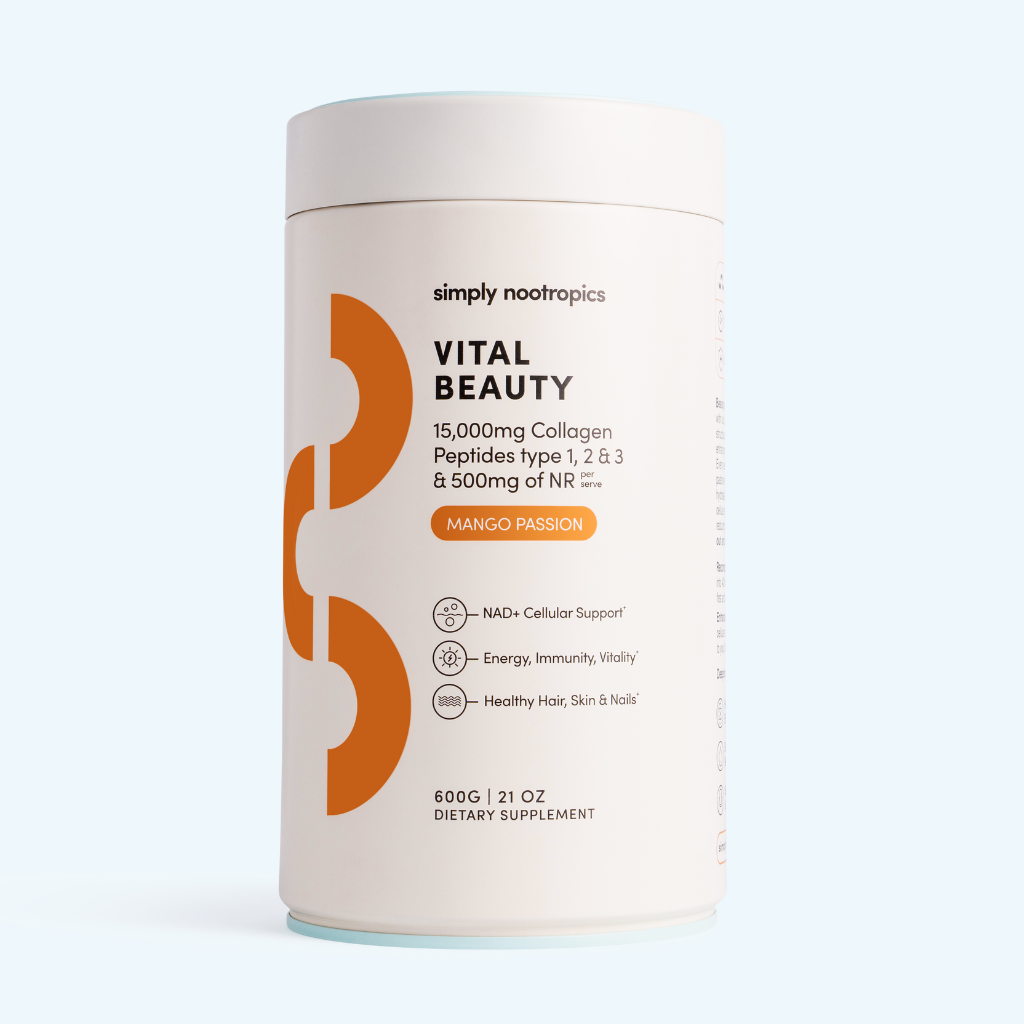
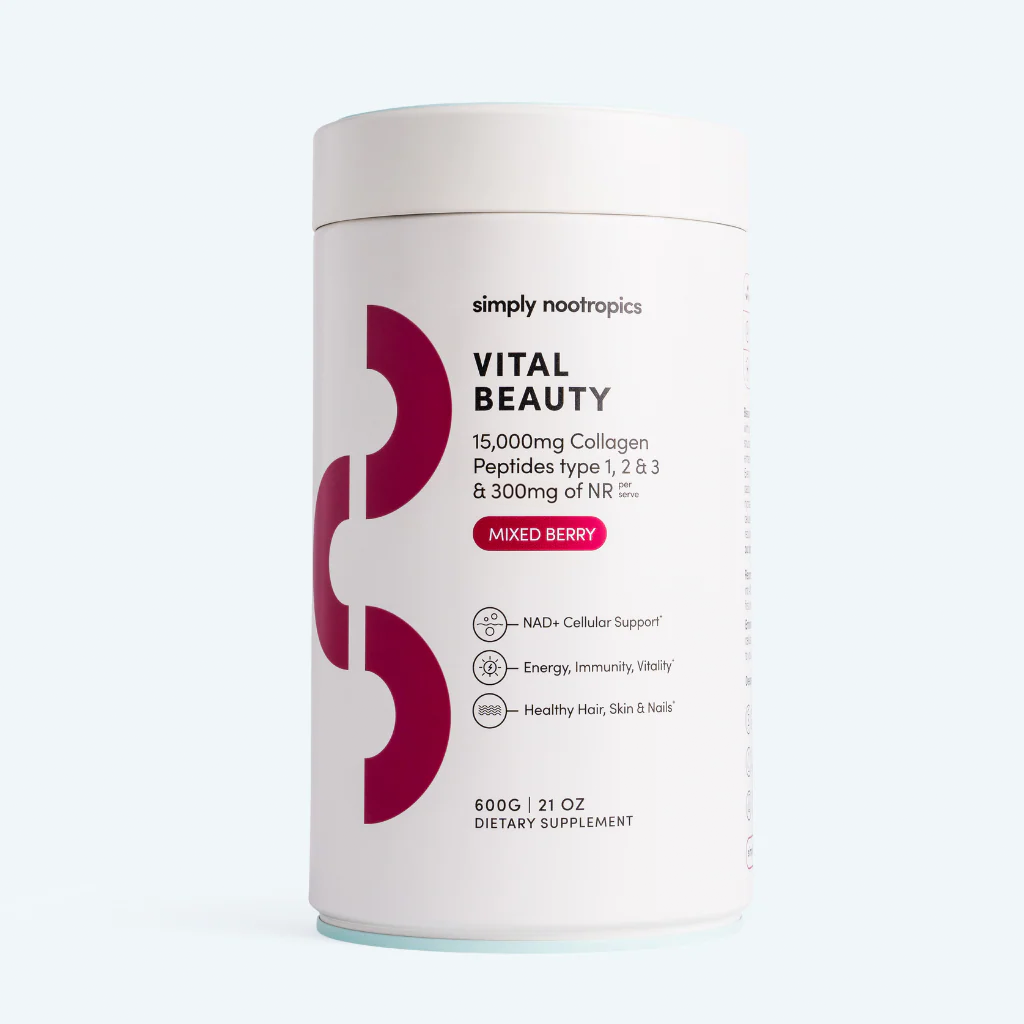
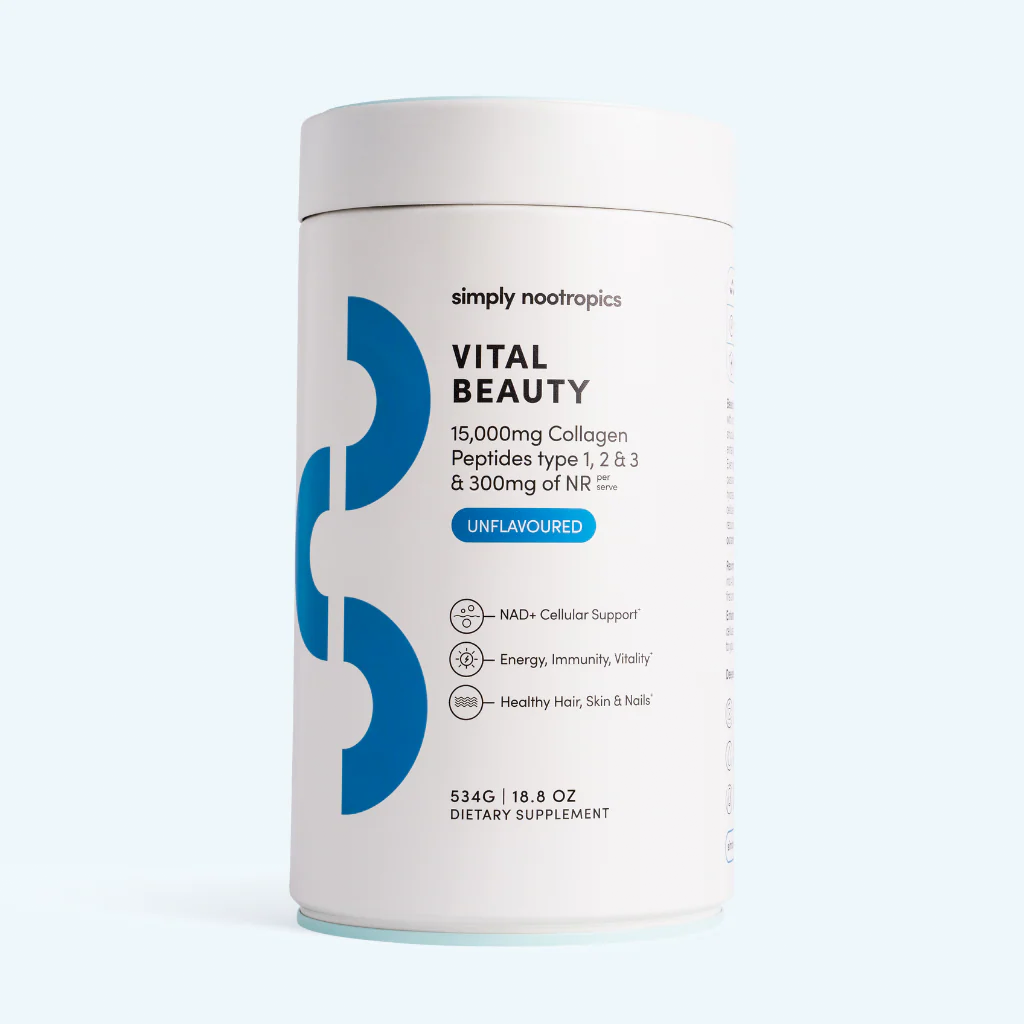
Vital Beauty Collagen provides hydrolysed bovine collagen peptides (types I, II and III) to support your joints, skin, hair and nails at a stage of life when your body makes less collagen on its own. Stir a scoop of Vital Beauty into a cold drink or smoothie after training, alongside a protein-rich meal, and it becomes part of the same routine that protects your muscle.