





Longevity research is moving away from single-organ explanations and towards something far more realistic: health outcomes linked to ageing, body composition, and cognition are shaped by networks. That’s why “simple” lifestyle shifts can feel surprisingly hard to sustain. The body isn’t just responding to one change, it’s recalibrating across multiple systems at once. This week’s research spans metabolism, the microbiome, brain development, and even consciousness itself.
1: Intermittent Fasting Reshapes the Brain-Gut-Microbiome Axis
A new study examining intermittent energy restriction (IER) offers rare insight into why sustained changes in body composition are so difficult and what may help.
Rather than tracking weight alone, researchers monitored changes across the gut microbiome, circulating markers, and brain activity using stool analysis, blood measurements, and functional MRI. Participants followed a structured programme with a highly controlled fasting phase followed by a less controlled phase designed to be more realistic long term.
The striking part wasn’t only the average weight change, it was the internal synchrony. The researchers observed that shifts in microbiome composition appeared alongside changes in brain regions associated with appetite, reward, attention, and behavioural control. These changes were dynamic, meaning they continued evolving during and after weight loss rather than stabilising immediately.
Why does this matter? Because weight maintenance is often treated as a test of discipline, when in reality the brain and body can subtly push back through cravings, reward sensitivity, stress signalling, and energy conservation behaviours. This study suggests that IER may influence not just intake, but the internal circuitry that shapes how effortful dietary restraint feels.
It’s also worth noting what this study does not prove. The links observed between microbial shifts and brain activity are correlational: we can’t say whether microbial changes caused the brain changes, whether brain changes reshaped the gut environment, or whether a third factor drove both. But the coupling is still meaningful: it supports the idea that effective long-term change may require system-level adaptation, not just short-term energy reduction.
2: Oral Bacteria Can Influence the Gut–Brain Pathway
Another recent study highlights a surprising contributor to brain health: oral bacteria.
Researchers found evidence that certain microbes commonly associated with the mouth can migrate to the gut and begin producing metabolites that circulate throughout the body. In experimental models, these compounds were shown to influence neural signalling pathways and contribute to inflammatory processes in the brain.
The main takeaway isn’t panic, it’s perspective. We’re used to thinking of the mouth, gut, and brain as separate “zones,” but microbial ecosystems don’t respect those boundaries. If a microbe can relocate and produce compounds that enter circulation, then oral health becomes part of a bigger conversation about long-term resilience.
This research also fits a broader trend: scientists are increasingly looking at metabolites - small molecules produced by microbes - as key messengers. Two people can have different microbiomes not just in which bacteria are present, but in what biochemical outputs those bacteria create. Over time, those outputs may influence neuroinflammation, signalling pathways, and the “background environment” the brain operates in.
In other words, the microbiome doesn’t just exist in the gut. It can shape systemic chemistry, and that’s a longevity-relevant idea.
3: The Human Prefrontal Cortex Develops More Slowly
Comparative neuroscience research published this year mapped the development of the human prefrontal cortex (PFC) at single-cell resolution and compared it with non-human primates.
The findings suggest that the human PFC develops more slowly and remains plastic for longer. That prolonged timeline may help explain uniquely human capacities like long-term planning, impulse control, and flexible decision-making, all traits that quietly shape longevity through daily choices.
From a practical standpoint, the PFC is deeply involved in regulating behaviour under stress. It helps us pause, think, and choose the long-term option over the immediate reward. That matters for everything from food choices to sleep routines to consistency with health habits.
But there’s a flip side: extended development and prolonged plasticity can also mean longer windows of vulnerability. Chronic stress, poor sleep, and persistent overload may make it harder for the PFC to regulate impulses, and over time that can influence patterns that look like “lack of motivation” but are better described as reduced cognitive bandwidth.
For longevity science, this study adds a valuable layer: supporting brain health is not just about memory later in life. It’s about maintaining the neural machinery that enables self-regulation and adaptive behaviour across decades.
4: Mind Blanking Shows Consciousness Is Not Continuous
A fourth study tackled a deceptively simple question: can the mind truly go blank?
Using high-density EEG, researchers identified moments during wakefulness when participants reported complete absence of conscious mental content. During these periods, brain connectivity dropped and sensory processing was partially suppressed, despite participants remaining awake.
These brief “off” states appeared more frequently after prolonged cognitive effort or sleep disruption. Behaviourally, participants were slightly slower and more error-prone, suggesting the brain was temporarily operating in a reduced-processing mode.
Why does this matter for longevity? Because it supports a growing understanding that the brain’s day-to-day function is not a smooth, continuous stream. It’s more like a mosaic of states. Under fatigue or overload, the brain may slip into short, sleep-like episodes even during the day, which can shape attention, decision-making, and the ability to stick to long-term goals.
This also offers a useful reframe: if someone is struggling with consistency, it may not be about trying harder - it may be about restoring the conditions that allow the brain to stay fully online. Sleep, recovery, and cognitive load management are not “nice to have”. They’re foundational.
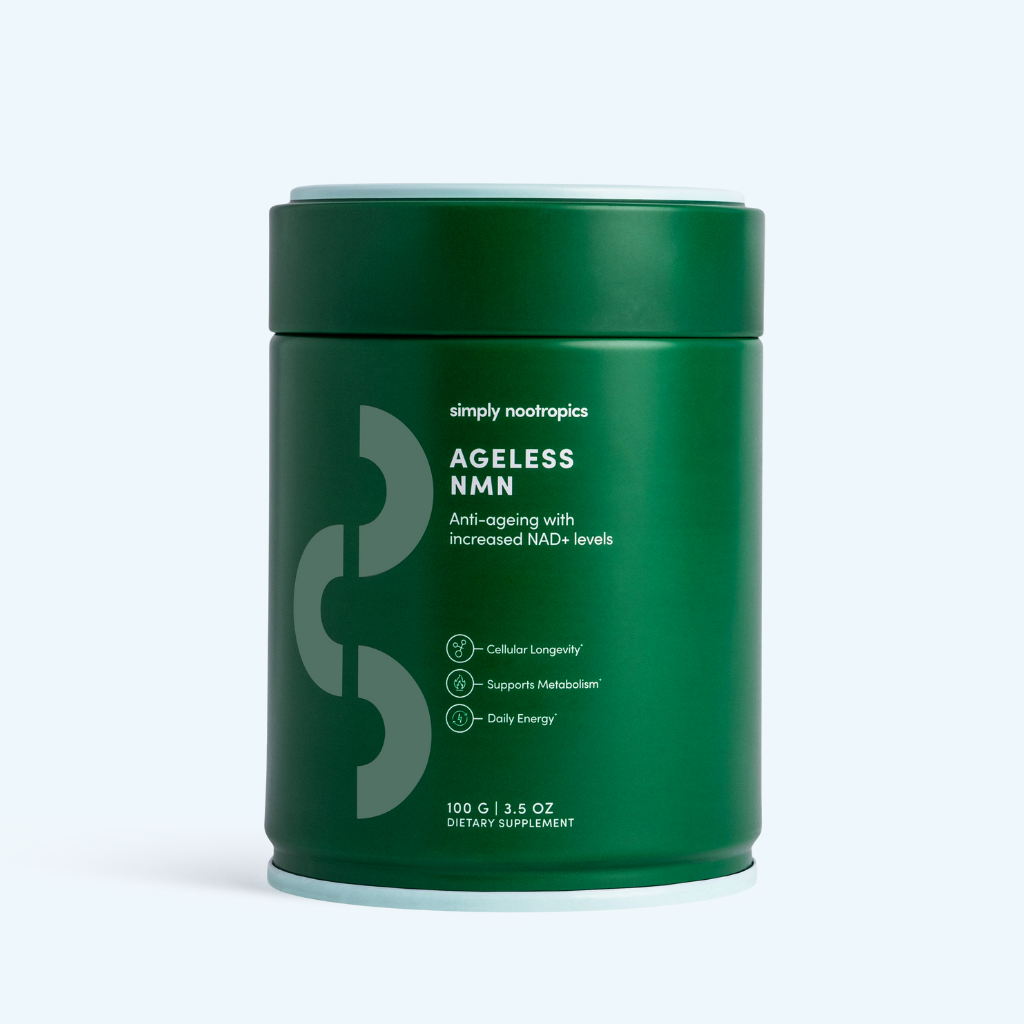
Supporting Cellular Energy with Ageless NMN
Many of the systems highlighted in this research, like brain activity, gut signalling, metabolic adaptation, are energy-dependent at the cellular level. As we age, the efficiency of these processes naturally changes, which can influence everything from how resilient we feel to how well we recover from stress.
Ageless NMN is designed to support cellular energy pathways by providing a precursor involved in NAD⁺ production, a molecule central to cellular maintenance and metabolic function. Rather than targeting a single outcome, Ageless NMN fits into a broader longevity strategy focused on supporting the underlying systems that enable adaptation.
If you’re building a longevity routine that prioritises steady habits over extremes, Ageless NMN is a simple place to start.