

Collagen has a branding problem. Walk through any supplement aisle or scroll through wellness content online and you'll find it surrounded by imagery that's almost exclusively aimed at women: glowing skin, long nails, shiny hair. The messaging has been so consistent for so long that most men have filed collagen under "not for me" and moved on.
That's a mistake worth correcting.
Collagen is the most abundant protein in the human body. It's the structural backbone of your skin, joints, bones, tendons, ligaments, and muscle tissue. From your mid-twenties onwards, your body produces less of it every year, roughly 1–1.5% annually. By your forties, the effects are hard to ignore: slower recovery from training, stiffer joints, skin that looks a little less firm, and connective tissue that's more vulnerable to injury than it used to be.
None of that is unique to women. The biology is the same. The decline is the same. The only difference is men need quality collagen too.
What Collagen Actually Does in the Male Body
Collagen isn't a beauty ingredient, it's a structural one. It makes up about 70% of the protein in your skin, 90% of bone matrix, and a significant portion of cartilage and tendon tissue. When levels drop, those structures lose integrity.
For men who train, this matters more than most realise. Tendons and ligaments don't recover from stress the way muscle does. They have poor blood supply and slow turnover. Collagen supplementation, particularly hydrolysed collagen peptides taken around exercise, has been shown in research to support connective tissue repair and may reduce the risk of injury over time.
Joint health is the other major one. Type II collagen is specifically concentrated in cartilage, and its breakdown is a key driver of joint discomfort as we age. Supporting collagen levels doesn't reverse damage that's already done, but it can help slow the process and maintain the cushioning that keeps movement comfortable.
Then there's bone density. Collagen is central to bone structure: it forms the protein scaffolding that minerals like calcium and phosphate bind to. As collagen declines, bone becomes more brittle. Men tend to lose bone density more slowly than women but still experience significant decline from middle age onward. It's a slow-moving problem that most people don't notice until it's already advanced.
The Skin Angle Men Are Missing
Yes, this section is about skin. Stay with it.
Men's skin ages differently to women's: it's thicker and oilier in younger years, which offers some protection, but it loses collagen faster once the decline begins. Male skin can drop up to 1% of its collagen content per year from the mid-twenties, and unlike female skin which tends to show gradual changes, the visible effects often come on more suddenly.
The result is lines around the eyes and mouth, reduced skin firmness, slower wound healing, and skin that looks older faster than it needs to. Collagen supplementation supports skin hydration and elasticity from the inside, not in a cosmetic way, but structurally. The research on this is reasonably consistent: regular collagen peptide supplementation is associated with improved skin elasticity and hydration across both sexes.
Collagen and Muscle: The Missing Piece
Most men focus on protein intake for muscle, and rightly so. But collagen's role in muscle health goes beyond what whey or casein can cover. Collagen makes up a significant portion of the connective tissue surrounding muscle fibres, and as levels decline, that scaffolding weakens.
Research has also pointed to collagen peptide supplementation supporting muscle mass in older men when combined with resistance training, not by building new muscle directly, but by improving the structural environment that supports it. For anyone training consistently or trying to hold on to muscle mass as they age, it's a meaningful addition that most protein supplements don't address.
Joint Health: The Slow Decline Nobody Talks About
Joint discomfort tends to creep up quietly. One day your knees feel fine after a run; a few years later they don't. Morning stiffness that used to clear in minutes starts lasting longer. Recovery from training takes more out of you than it used to. Most men chalk this up to ageing and move on, but a significant part of what's happening is structural, and collagen is central to it.
Cartilage is the cushioning tissue between your joints, and it's made almost entirely of collagen, predominantly Type II. Unlike muscle, cartilage has no direct blood supply, which means it repairs slowly and gets little support from circulation. Once it breaks down, it doesn't regenerate easily. Collagen supplementation doesn't reverse existing damage, but the research suggests it can slow the breakdown process and support the maintenance of cartilage integrity over time.
Tendons and ligaments are the other piece of the puzzle. They're the structures that connect muscle to bone and bone to bone, and they take enormous load during exercise. Hydrolysed collagen peptides, particularly when taken around training, have been shown to increase collagen synthesis in connective tissue, which may reduce injury risk and support recovery. For men who train hard or carry old injuries, this is one of the more practical reasons to take collagen seriously.
Why Type Matters
Not all collagen is the same. There are over 28 types identified in the body, but three are most relevant for everyday supplementation:
- Type I is the most abundant, found in skin, hair, nails, tendons, and bone. It's the primary driver of skin firmness and structural integrity across connective tissue.
- Type II is concentrated in cartilage and is particularly relevant for joint health and mobility.
- Type III works alongside Type I in skin and blood vessels, and is important for tissue elasticity.
Most collagen supplements use a single type, which limits what they can support. A formula that includes all three covers more ground, particularly for anyone looking to support joints, skin, and general connective tissue health simultaneously.
What Else Is in Vital Beauty
Collagen peptides work better in context. Vitamin C is essential for collagen synthesis, the body can't produce new collagen without it. Hyaluronic acid helps retain moisture in joints and skin. Biotin supports hair and nail strength. And keratin, the structural protein in hair and nails, is a natural complement to collagen's role in the same tissues.
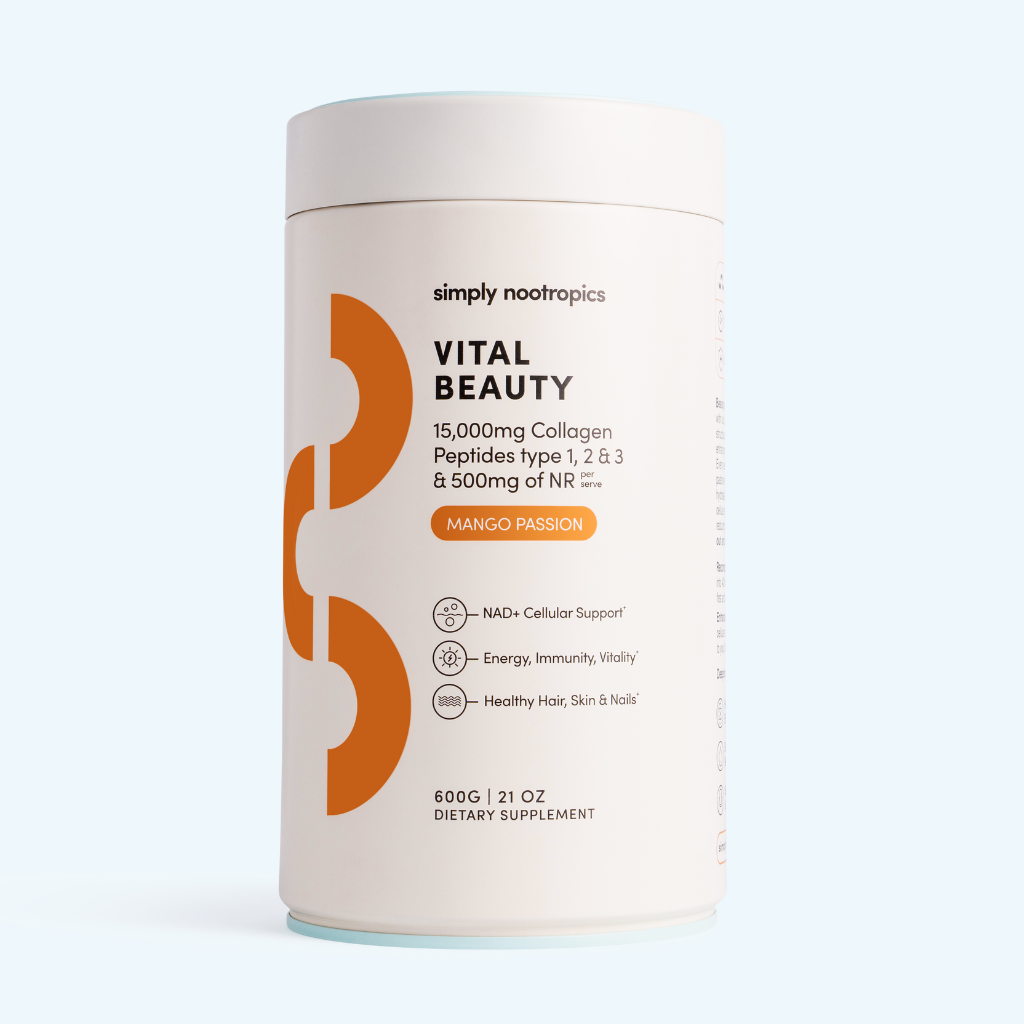
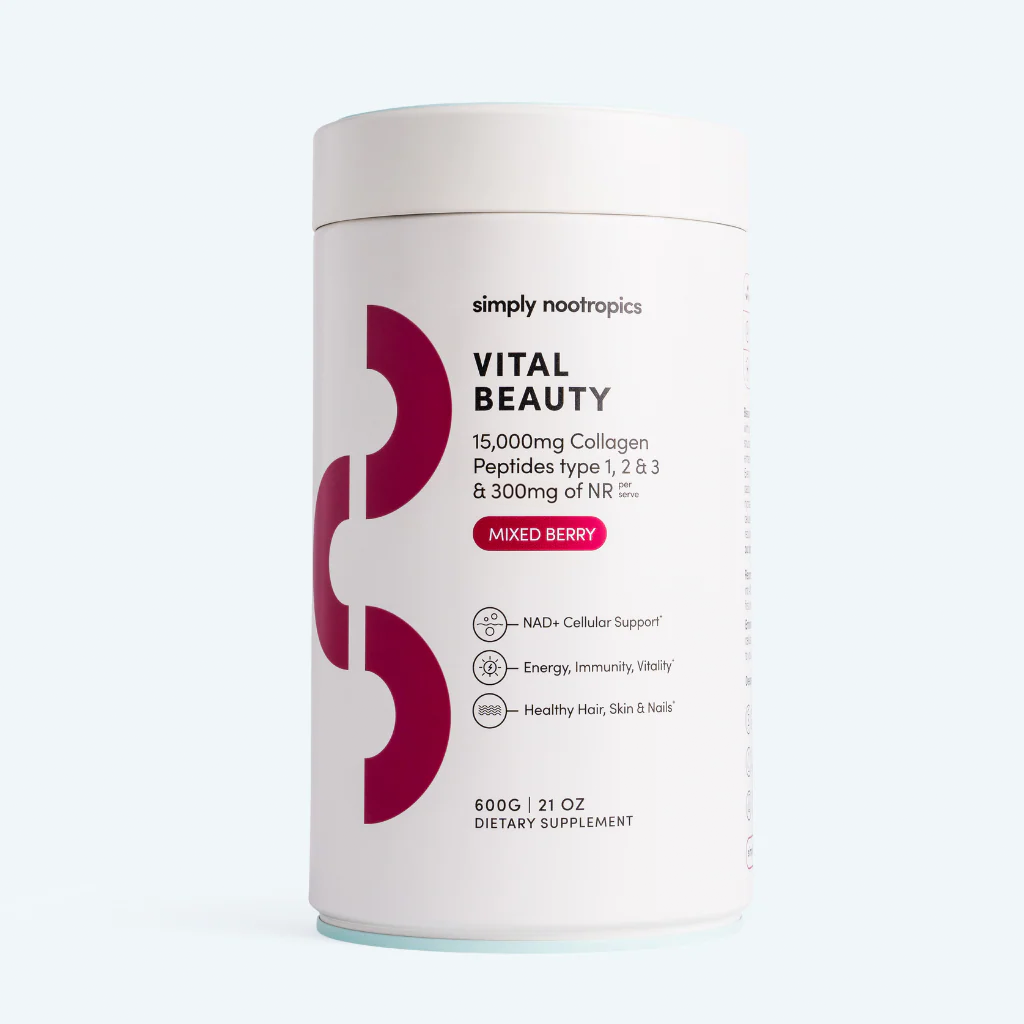
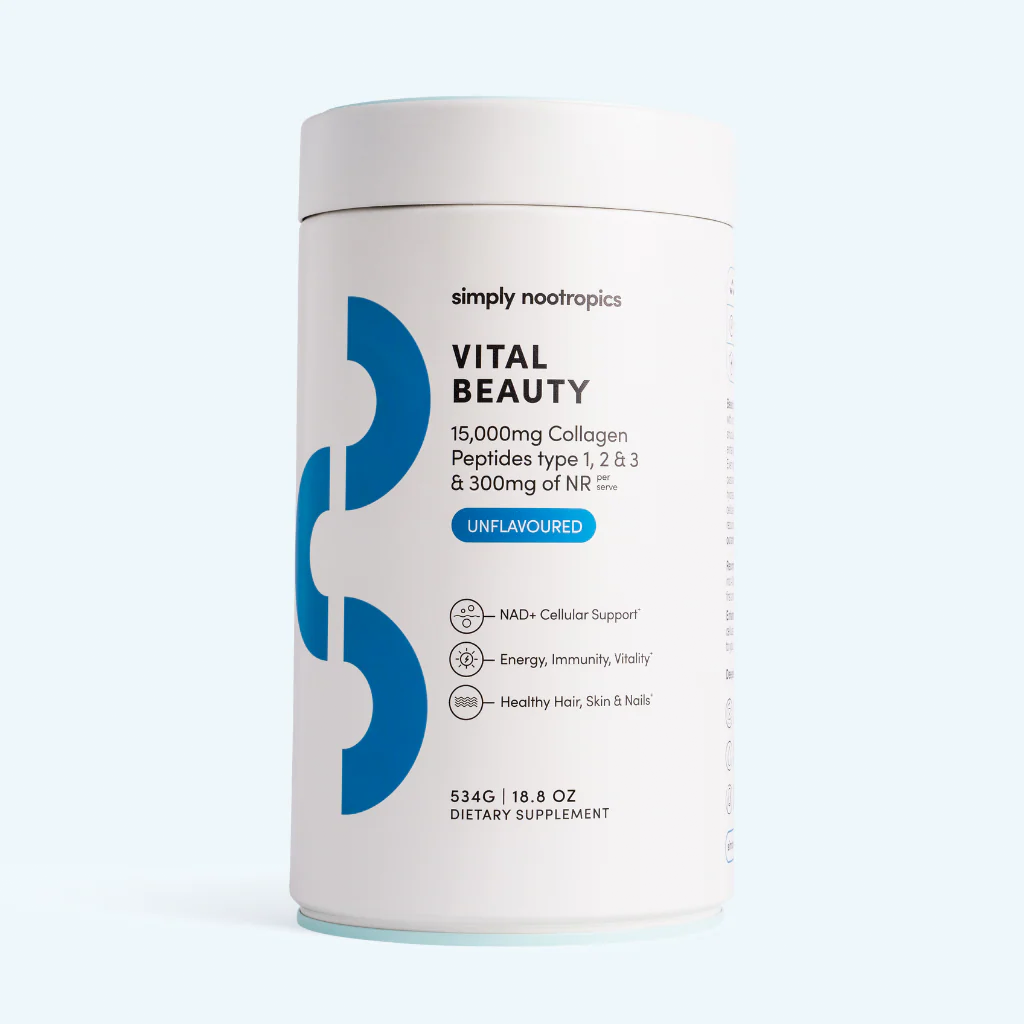
Vital Beauty combines 15,000mg of hydrolysed bovine collagen (Types I, II, and III) with NR (a NAD+ precursor), TMG, keratin, hyaluronic acid, L-glutathione, biotin, vitamin C, and vitamin E in a single daily serve. It's designed to support skin, hair, nails, joints, and bones without requiring a stack of separate supplements, and the unflavoured version mixes into coffee, a shake, or water without changing the taste.