

Two people can share a birthday and be worlds apart on the inside. One feels sharp, mobile and steady at sixty. The other feels a decade older at fifty. Same number of candles, very different bodies. The honest question is not how old you are, but how fast you are actually ageing.
For a long time the calendar was the only answer we had. Now researchers who study the biology of exceptional longevity think they have a better one, and it comes from an unlikely place. They took a close look at the oldest verified person who ever lived and asked what her body could teach the rest of us.
Your Birthday Is Not Your Biology
Chronological age counts the years since you were born. It moves at one speed for everyone, and there is nothing you can do about it. Biological age is different. It describes the actual condition of your cells, tissues and systems, and it can run faster or slower than the number on your driver's licence.
This is where the idea of a pace of ageing comes in. Scientists can now read markers inside the body, such as patterns on your DNA and signs of inflammation, that reveal roughly how quickly you are wearing down. Some people in their fifties carry the biology of someone much younger. Others age ahead of schedule without realising it, often because stress, poor sleep and constant low-grade inflammation quicken the pace long before any birthday makes it obvious.
The useful part is that biological age is not fixed in the way your birthday is. It responds to how you live, which means the pace can be influenced rather than simply endured.
What the Oldest Person on Record Revealed
The person in question lived to 117, and a team of researchers mapped her biology in remarkable detail. They looked at her genes, her gut bacteria, how she processed fats, her levels of inflammation, and the chemical patterns sitting on top of her DNA. The picture that came back surprised even the scientists.
Her body did not look like that of someone worn out by more than a century of living. Inflammation was low. Her metabolism handled fats efficiently. Her gut was populated by helpful bacteria more often associated with younger people. Most striking of all, the chemical marks on her DNA resembled those of a person far younger than her years.
The headline the researchers drew from this was simple and quite radical. Extreme old age and poor health are not automatically linked. The people who live longest tend to be the ones who stay the healthiest for the longest, rather than those who simply endure decades of decline. Long life, in other words, looks less like surviving old age and more like postponing it.
Ageing Is Not a Single Switch
The most important lesson from this work is that there was no single secret. No one gene, food or habit explained her long life. Instead, several protective systems were all working well at the same time, and they reinforced each other.
The analysis pointed to a combination of factors rather than one cause:
-
Genetic variants that appear to protect against age-related disease
-
Low levels of inflammation, which spares tissues from constant low-grade damage
-
Efficient handling of fats and other fuels the body runs on
-
A resilient gut populated by beneficial bacteria
-
DNA patterns that stayed youthful rather than drifting with the calendar
This matters because it reframes what healthy ageing actually asks of us. There is no magic switch to flip. The pace of ageing is set by many small systems doing their jobs well, day after day, which is far more encouraging than waiting for a single breakthrough.
The Part of Ageing You Can Actually See
Ageing does not only happen deep inside the cell. A large part of it plays out on the surface, in the tissues that give the body its structure. Collagen is the protein behind much of that structure, and it holds skin, joints, hair and nails together.
Collagen production starts to slow from your mid-twenties and keeps declining gradually from there. The visible signs tend to build slowly and then feel sudden:
-
Skin that looks less firm and takes longer to bounce back
-
Fine lines and a loss of the plumpness that holds moisture
-
Joints that feel stiffer or noisier than they used to
-
Hair and nails that grow slower or feel more brittle
None of this is a personal failing. It is the external counterpart to the internal pace of ageing, and it responds to support in the same way the rest of the body does.
Habits That Keep the Pace Gentle
The research on long-lived people keeps circling back to the same unglamorous truth. Steady, repeated habits do most of the work. You cannot copy someone's genes, but you can copy the conditions that let protective systems function well.
A few habits carry more weight than the rest:
-
Sleep properly, because deep sleep is when much of the body's repair happens
-
Move regularly, since activity supports metabolism, circulation and joint health
-
Eat enough protein, which supplies the amino acids your body rebuilds tissue from
-
Get plenty of vitamin C, which your body needs to form collagen at all
-
Protect your skin from the sun and stay hydrated across the day
Consistency beats intensity every time. The pace of ageing is not decided by one heroic effort, but by the small choices you repeat until they stop feeling like choices at all. Supporting your body from the inside is one of those choices, and it is an easy one to build into a morning.
Product Spotlight
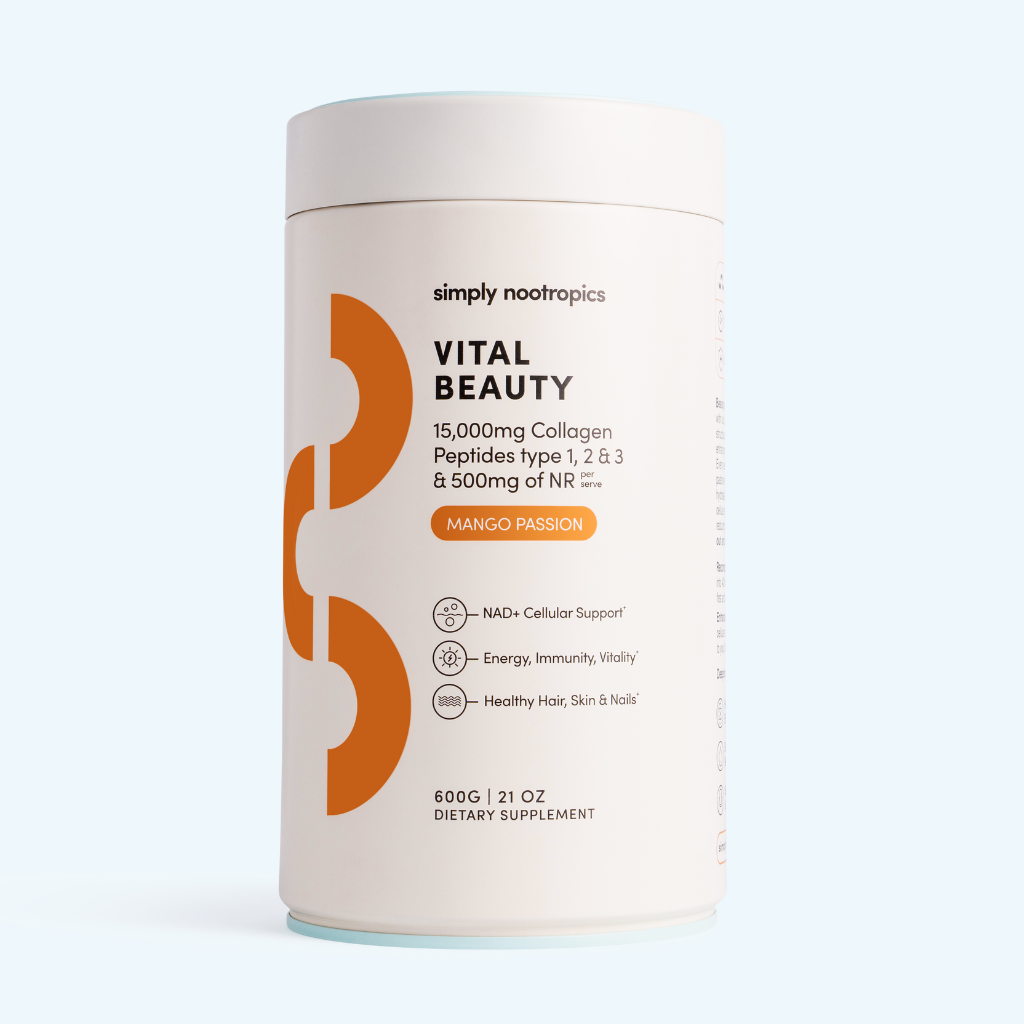
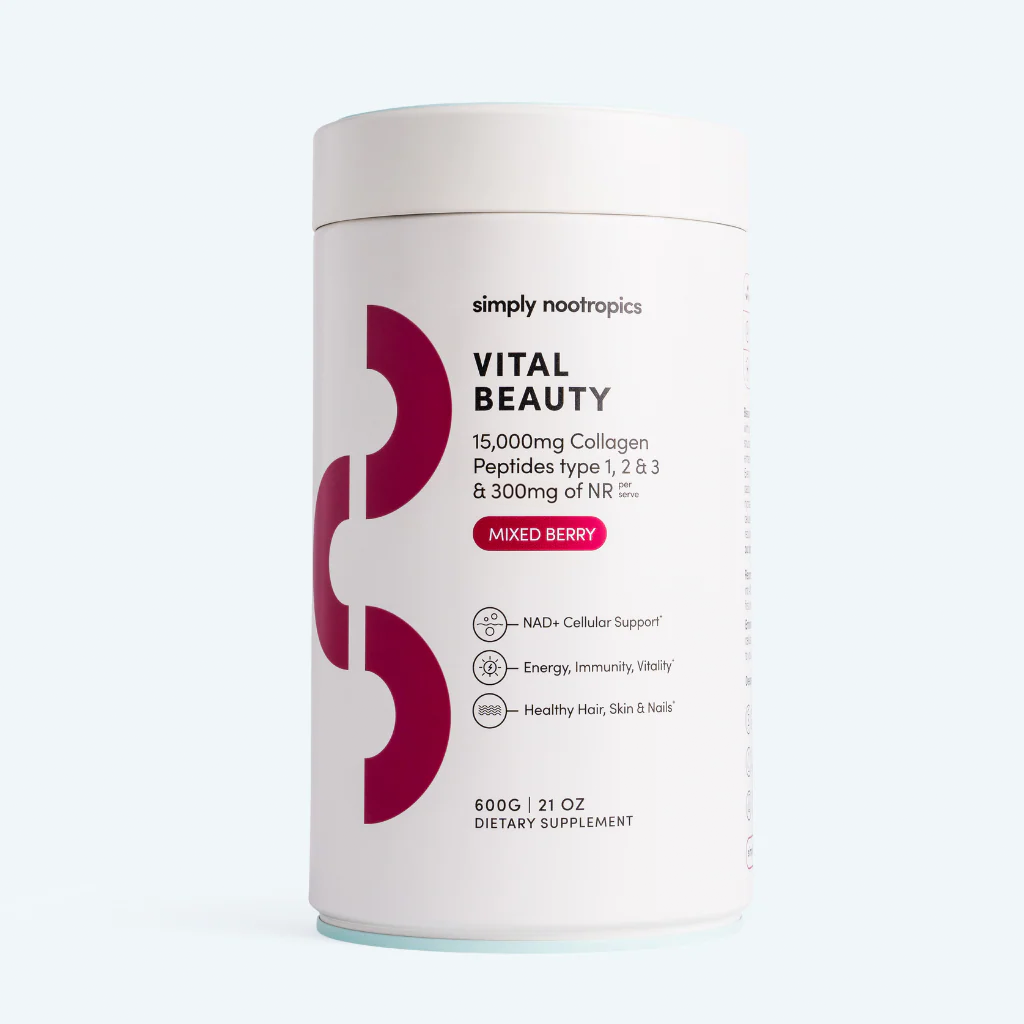
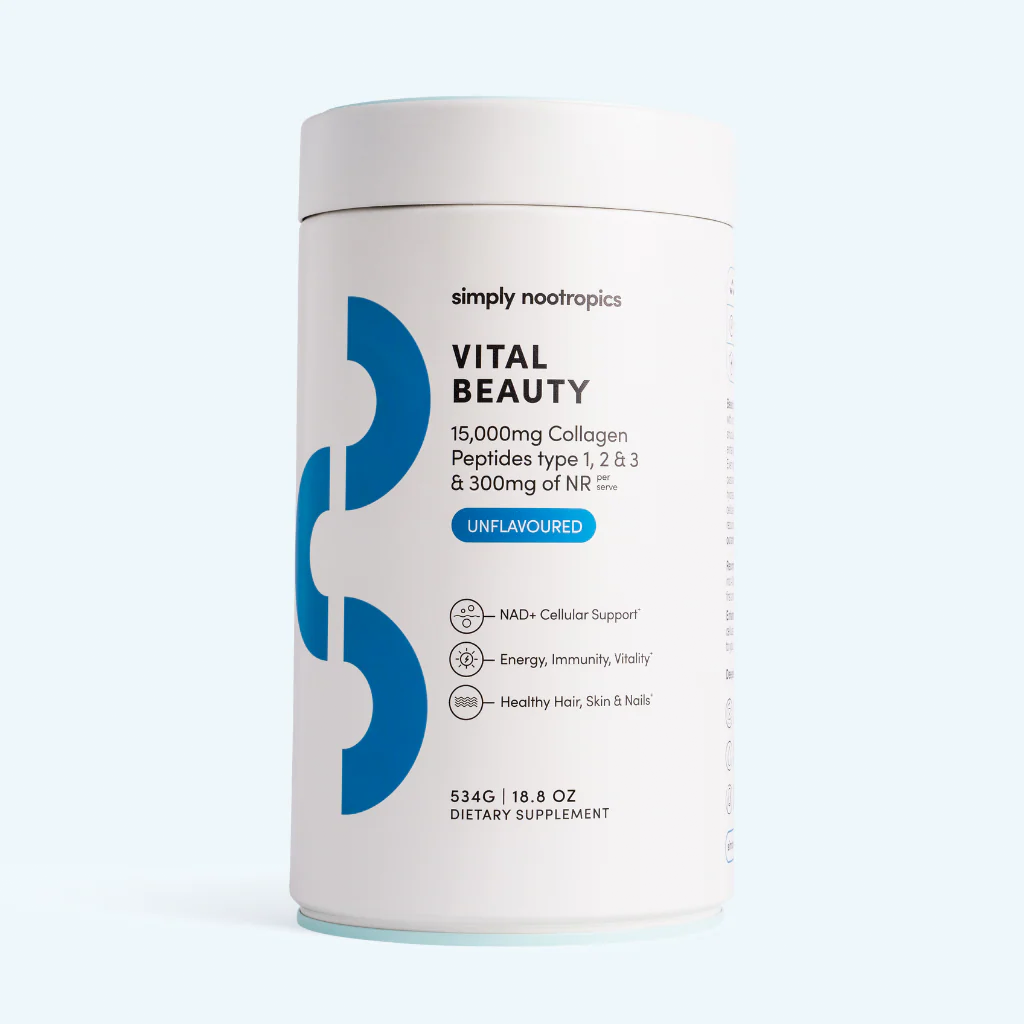
The idea running through all of this is that the pace of ageing is set by small systems doing their jobs well, over and over. Vital Beauty Collagen supports one of the systems you can actually see, the structural tissues that feel the years first. Its hydrolysed collagen peptides are made to support skin elasticity and hydration, along with the hair, nails and joints that start to show it as your own collagen tapers from your mid-twenties.
It also happens to be one of the easiest habits to keep, which is the whole point. A single daily scoop of Vital Beauty stirs into whatever you already drink, so it slots into your morning without asking much of you. Keep it up and let the small, repeated effort do the work, the way the people who age slowest tend to get there, through steady repetition rather than one big push.